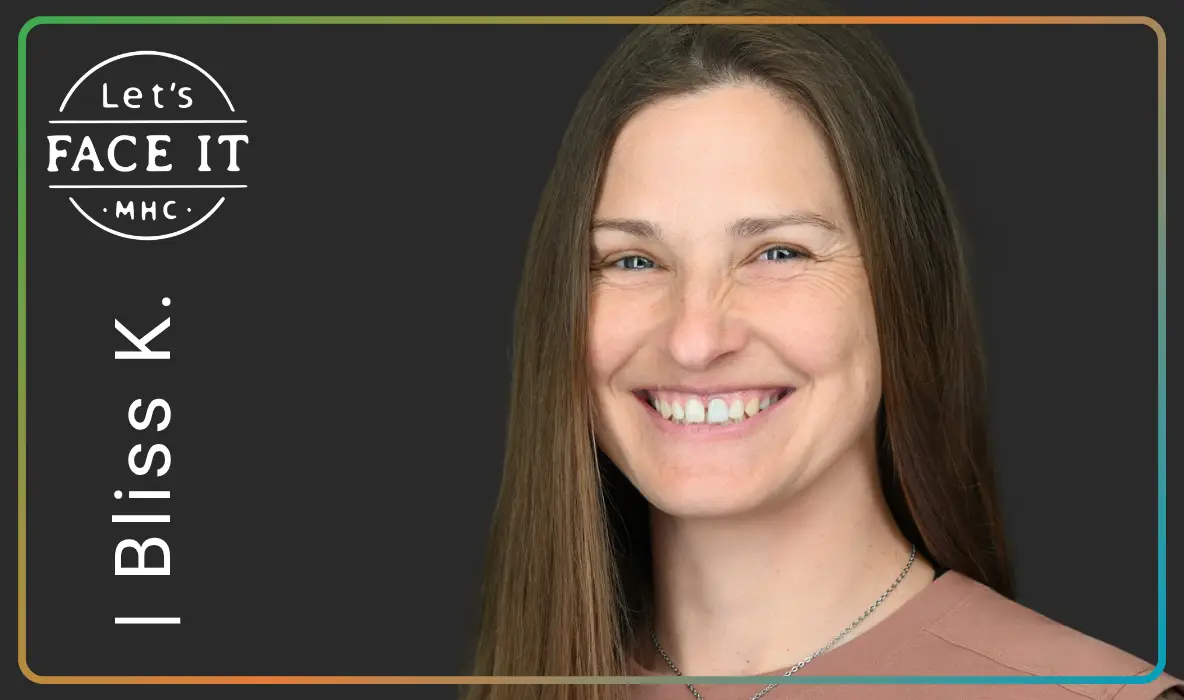
“As a clinician and friend, my biggest strength and liability are the same: I don’t really know how to be inauthentic.”
From an early age, Bliss understood that per experience of identity did not fit neatly into traditional expectations. Bliss reflects on how much emphasis society places on appearance when discussing gender identity. In per work with parents of transgender and gender-diverse youth, per frequently hears barriers to acceptance like, “She doesn’t look like a boy,” or “He doesn’t look like a girl.” Many people, transgender and cisgender alike, find the restrictions of binary identities stifling. Bliss recognizes this through the use of person pronouns (per/per/pers) because if someone struggles to acknowledge someone else as a person, that helps to shine the light on how controlling gender constructs are.
Bliss didn’t have to manage much gender policing at school or in per family. Per describes per parents as loving and accepting, creating space for exploration and authenticity while providing a safe, supportive foundation during times when the broader society struggled to understand. Still, growing up being perceived as “weird,” as Bliss describes it, came with challenges. Bliss remembers middle school and puberty being especially difficult, noting that adolescence can be hard for anyone, but even more so for gender-diverse youth. While per sometimes felt pressure to conform to certain roles to fit in, by high school Bliss realized per no longer had to play by anyone else’s rules.
As per grew older, Bliss experienced the most judgment and aggression over per relationships, how they looked together, and how each identified. The weight of stigma eventually contributed to Bliss leaving a PhD program in English, feeling disillusioned by environments that rewarded rigid thinking over diverse experiences and a growth mindset.
A few years ago, after a breakfast conversation with per partner about the urgent need for therapists who specialize in supporting transgender and gender-diverse individuals, Bliss decided to pursue an entirely new career path. Leaving behind per role leading an animal shelter, per applied to Fairfield University to pursue a degree in counseling with a specialty in supporting mental health for queer and trans clients.
In a fitting reflection of per honesty, Bliss’s admissions essay focused on why per holds suspicions about therapy and the harm the profession has historically caused to minoritized individuals. Bliss’s distrust of therapy stems from both personal experience and what per has witnessed in the lives of loved ones. Per believes traditional therapy has often operated under a medical model that stigmatizes difference, particularly for queer and gender-diverse individuals. In Bliss’s view, labeling people as “disordered” simply because they exist outside societal norms can cause profound harm, reinforcing stigma rather than affirming identity.
Bliss’s perspective is also deeply shaped by per sister, who lives with a serious mental health condition and has spent most of her adult life on disability. Growing up alongside her taught Bliss to see mental health challenges not as something to fear, but simply as part of human variation. Watching per sister navigate life also instilled a fierce protectiveness and heightened awareness of the consequences of careless medical treatment. Bliss recalls watching per sister struggle when medications that had once worked stopped being effective, and questioning why providers, who knew this day would come, had not prepared for that inevitability.
At the same time, Bliss deeply admires per sister’s resilience. Though it took her ten years, she earned her bachelor’s degree, reinforcing for Bliss the belief that mental health challenges do not define a person’s capabilities. “It’s bullshit that people think you can’t do things because you have a mental health condition,” per says.
Today, Bliss balances work as a mental health clinician with per role as the Director of Support Services with Q Plus, a Connecticut youth organization supporting LGBTQ+ youth. Through support groups, youth programming, and community education, Bliss helps create spaces where young people can safely explore identity, build resilience, and find belonging. Per also facilitates parent groups for families of transgender youth, helping caregivers better understand and support their children.
Above all, Bliss advocates for greater nuance and honesty within mental health care, especially when it comes to LGBTQ+ competency. Per is critical of clinicians who broadly claim to be “LGBTQIA+ competent” without recognizing the vast differences between communities. Bliss believes true competency requires humility and specificity, understanding that every identity and lived experience comes with unique needs, and no one clinician can be everything to everyone.
Throughout it all, Bliss has relied on connection and community to sustain per own mental health. Per hikes, climbs, and spends as much time outdoors as possible, often alongside a close-knit group of friends. Bliss credits these relationships as one of the greatest protective factors in per life. “Having true social connection is essential,” per says. “Having people who get you, and you get them.”
For Bliss, authenticity is the gift and guiding force behind everything per has done and continues to do: advocacy, work, relationships, and commitment to helping others also live fully and honestly.
———————–
Let’s Face It
Launched in 2022 by Mental Health Connecticut, Let’s Face It takes place every May in celebration of Mental Health Awareness Month. Throughout the month, we host and participate in events, share daily wellness content and vital resources, and spotlight Connecticut residents with lived experiences, amplifying their voices and journeys to inspire hope and understanding.
Why focus on stigma? Because it’s pervasive, taking on various forms, and we firmly believe that its power diminishes when faced head-on. By sharing these compelling stories and daily wellness content, our aim is to spark more conversations, show the individuality of mental health, and increase awareness. Through Let’s Face It, we hope to help create a safer and kinder Connecticut for all.
Let’s Face It 2026 is presented by ConnectiCare. Learn more at mhconn.org.
Story Sponsor