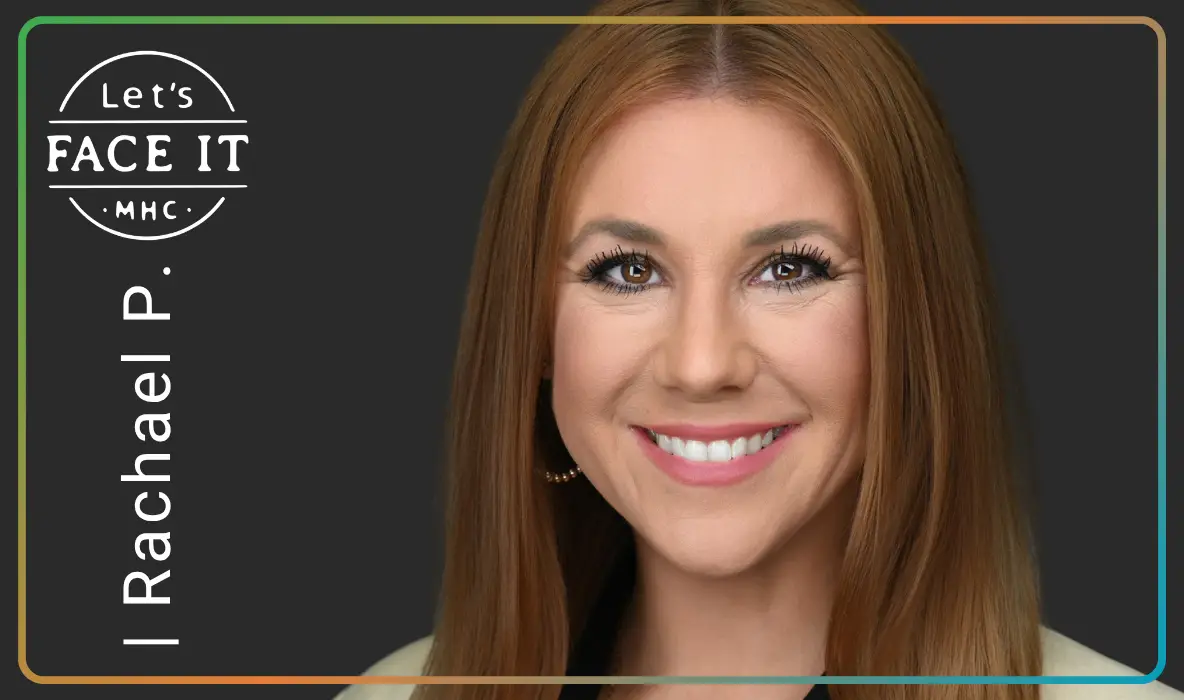
Rachael’s mental health journey began after the birth of one of her children, when she was diagnosed with postpartum depression. Prior to that, she had managed anxiety with coping skills and therapy as needed, but this experience was different. It was the first time she felt a loss of control over her mental health. She felt isolated and hopeless, and without the language to fully express what she was going through. For Rachael, this experience brought to light the seriousness and complexity of mental health challenges that so many face.
“I had other mothers to lean on, but they told me it was just the baby blues and ‘don’t worry, you’re not crazy.’”
At a time when Rachael was trying to express herself and ask for help, people’s responses were dismissive, and to be told she wasn’t crazy only highlighted the intense stigma around mental health. Rachael knew she needed help, and she kept reaching out for it, eventually asking her doctor who connected her to a therapist. Her journey to recovery took about a year, as she grappled with the postpartum depression and shift in her identity since becoming a mother.
Rachael’s experience with postpartum depression changed how she chose to raise her own kids who are now pre-adolescent. Realizing that mental health wasn’t talked about and she wasn’t exposed to many human differences as she grew up, Rachael made it a priority for her kids, ensuring they could be their authentic selves, understood inclusivity, learned adaptability, and had empathy for themselves and those around them.
Rachael’s mental health challenges continued as life presented a new set of hurdles. About a year ago, Rachael was rushed to the emergency room and transferred between hospitals, where doctors spent weeks trying to determine what was going on. As she faced the unknown and spent night after night in the hospital, “mom guilt” surfaced as she missed her kids and milestones such as concerts, games, and last day of school events. Ultimately, at just 39 years old, Rachael’s treatments among many other surgeries included a hysterectomy, which initiated menopause. During menopause, women’s levels of estrogen and progesterone often drop to similar levels as postpartum.
“I remained high-functioning, continuing to work and wearing a mask, but inside, I was slipping away from who I used to be. It was terrifying and sad. I like who I used to be, and while postpartum was temporary, I still don’t know if this is.”
Immediately following her hospital discharge, Rachael felt physically and mentally depleted. She had lost 15 pounds, felt weak, and struggled to find a way to cope or access the support she needed. “Social media was the worst,” she shares. “It makes you feel like there’s a right way life is supposed to unfold, and you can’t help but compare yourself to others. It also normalized using a glass of wine to cope, like drinking is just how moms get through the day.” For Rachael, that was a slippery slope.
It was two pivotal conversations that helped to shift things. A colleague experiencing postpartum depression recognized the similarities in their stories, helping Rachael understand her mental health needs and feel less alone. Soon after, a close friend stepped in, telling Rachael she was willing to risk their friendship to make sure she got help. Those moments became turning points, guiding Rachael toward therapy, deepening her understanding of what she continues to experience today, and helping her build healthier ways to cope.
Today, Rachael is still finding her way through this next challenge, meeting with two therapists whose approaches help her in different ways, utilizing Orange Theory to clear her mind and take a break from it all, leaning on friends and family for support, and walking to connect with nature and decompress. She is supported by family, friends, and a workplace that prioritizes mental health.
From encouraging authenticity and offering flexible PTO to providing free therapy and other resources through Lyra, as well as Mental Health First Aid training, Rachael’s workplace, OneDigital, demonstrates a genuine commitment to mental health. Their culture of support has played a meaningful role in helping Rachael access care and navigate her mental health journey. Rachael has also made the brave choice to share her story and mental health experiences with as many people as possible, opening up to people not only through this story but also in day-to-day conversations in the hopes that her experience can help someone else.
“Through all of this, years and years of going through different circumstances, it’s sort of ironic. As much as I haven’t felt like myself, I’ve actually become more myself than ever. I’ve learned how to use my experiences, understand my triggers, and find ways to help others. It’s been really hard, but also really great. I’m still going through it, and I know it will never really be over, but I’ve realized how many people truly love me. If I didn’t have that support, there’s no way I would be here.”
———————–
Let’s Face It
Launched in 2022 by Mental Health Connecticut, Let’s Face It takes place every May in celebration of Mental Health Awareness Month. Throughout the month, we host and participate in events, share daily wellness content and vital resources, and spotlight Connecticut residents with lived experiences, amplifying their voices and journeys to inspire hope and understanding.
Why focus on stigma? Because it’s pervasive, taking on various forms, and we firmly believe that its power diminishes when faced head-on. By sharing these compelling stories and daily wellness content, our aim is to spark more conversations, show the individuality of mental health, and increase awareness. Through Let’s Face It, we hope to help create a safer and kinder Connecticut for all.
Let’s Face It 2026 is presented by ConnectiCare. Learn more at mhconn.org.