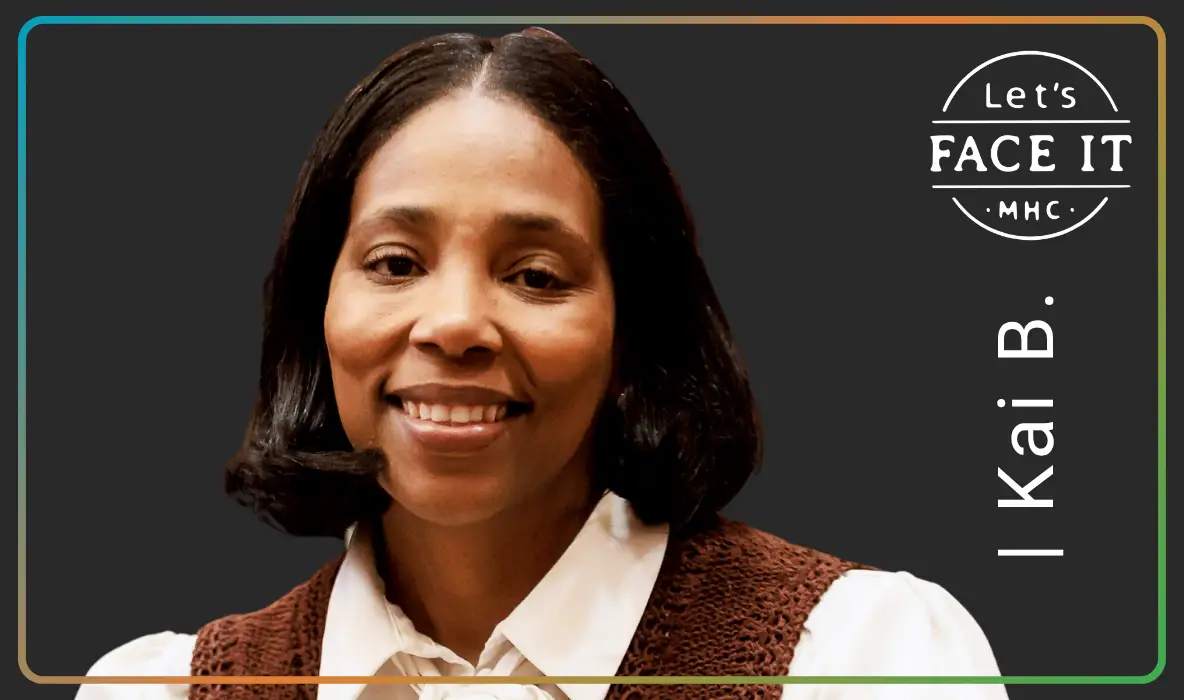
Kai Belton is a mother, grandmother, social worker, woman of faith, and the State Representative for Middletown’s 100th District. Throughout her career, she has worked in spaces where support is needed most, serving children in schools, supporting families experiencing domestic violence, responding to crises in the community, and assisting individuals facing food insecurity and housing instability. Today, as a state representative, Kai is uniquely positioned to address the very systems she once encountered on the frontlines. For her, shaping policy to better serve communities is not just a role, it is the fulfillment of a social worker’s dream.
Kai’s commitment to this work is deeply personal. As a child, her father struggled with significant, untreated mental health challenges and substance use, which deeply impacted her family. At the time, her family didn’t have the language or understanding to make sense of what was happening. His experiences led to behaviors that resulted in incarceration and her parents’ divorce, leaving her to navigate significant trauma.
In Kai’s family and culture, while recognizing that not all Black families share the same experience, mental health wasn’t something you named or talked about. People were often told to pray, push through, and be strong, rather than understand what they were experiencing; Yet, when she began facing her own challenges, her mom made the powerful decision to get support. Through play therapy, Kai’s mom gave her the space to process what she had been through, going against the norm in a way that changed the trajectory of Kai’s life.
A defining moment came in young adulthood, when she heard a pastor affirm, “Yes, we pray and God is there for us, but God never said we can’t also go to therapy. God creates opportunities for help in many different ways.” That moment shifted something in Kai. It affirmed what she had always felt but didn’t yet have the words for. Now, Kai is confident that God places resources and support in our lives for a reason.
These early experiences continue to shape Kai’s work today. They inform her compassionate approach as both a therapist and a legislator, and her understanding that mental health challenges ripple beyond individuals to impact families and entire communities, especially when left unrecognized and untreated. This perspective fuels her commitment to reducing stigma, expanding access to care, and ensuring that people receive the support they deserve.
While awareness around mental health has grown, Kai recognizes that access to timely, affordable, and culturally responsive care remains a significant challenge. In the legislature, she focuses on strengthening systems of care and advancing policies that address these gaps. Her work is grounded in lived experience, both her own and that of the individuals and families she has served, allowing her to approach policy with a deeply human lens.
During the current legislative session, Kai is leading several key initiatives. She is advancing legislation on menopause, including workplace accommodations and a provider toolkit developed in partnership with the YWCA and the UConn Health Disparities Institute, aimed at improving recognition, screening, and care. She is also working to remove inequitable barriers to entering the behavioral health workforce, including reevaluating certain MSW requirements, to help grow and diversify the field. In addition, she is advocating for increased Medicaid reimbursement rates, recognizing that underfunding directly limits access to quality care, particularly in under-resourced communities.
Her earlier legislative efforts have focused on maternal health, with a particular emphasis on addressing disparities in Black maternal health outcomes in Connecticut. As Chair of the Black Maternal and Infant Health Caucus, Kai has championed doula-affirming policies, recognizing their role in improving birth outcomes, and helped establish a maternity care report card to increase transparency and accountability across hospitals and birthing centers. She also supported the creation of a task force on perinatal mental health to better understand and address the mental health factors contributing to maternal mortality.
Amid these responsibilities, Kai remains intentional about caring for her own mental health. With a schedule that can include back-to-back meetings, she prioritizes a morning routine of prayer, meditation, movement, and grounding. She views self-care not as optional, but as essential and even as a radical act of resistance.
Through her personal healing journey, Kai has learned to check in with herself regularly, asking what she needs in each moment. Whether it’s rest, hydration, or stepping outside for a walk, she responds without hesitation, even if it means stepping back from a full calendar. She understands that her relationship with herself is foundational, and that she cannot show up fully for others without first taking care of her own wellbeing.
By setting boundaries and prioritizing her health, Kai is able to lead, serve, and advocate with intention and presence. She also recognizes that her earliest understanding of care came from her grandmother, who provided a sense of safety and calm, often through simple, nurturing acts like cooking or humming.
Today, Kai carries those lessons with her, continuing to lead with compassion, authenticity, and a deep commitment to creating systems that support the wellbeing of all.
You can learn more about Kai’s work here.
———————–
Let’s Face It
Launched in 2022 by Mental Health Connecticut, Let’s Face It takes place every May in celebration of Mental Health Awareness Month. Throughout the month, we host and participate in events, share daily wellness content and vital resources, and spotlight Connecticut residents with lived experiences, amplifying their voices and journeys to inspire hope and understanding.
Why focus on stigma? Because it’s pervasive, taking on various forms, and we firmly believe that its power diminishes when faced head-on. By sharing these compelling stories and daily wellness content, our aim is to spark more conversations, show the individuality of mental health, and increase awareness. Through Let’s Face It, we hope to help create a safer and kinder Connecticut for all.
Let’s Face It 2026 is presented by ConnectiCare. Learn more at mhconn.org.