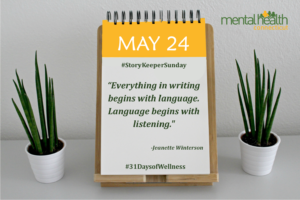
 Jeanette Winterson once said that “Everything in writing begins with language. Language begins with listening.” Throughout Mental Health Awareness Month, we have been discussing the power of storytelling, the healing it can provide to both the storyteller and the StoryKeeper, and the various methods of telling a story (a voice, a pen, a sketchbook, a song). When sharing one’s story, the hope is that the person or group you are sharing it with hears you and understands your message. Being a good listener is a skill that takes practice and our network of StoryKeepers are here to help with some important tips.
Today, while many of us are physically distant from our loved ones, we are going to discuss the art of Long Distance Listening.
What is Long-Distance Listening?
Long-Distance Listening is a skill used when communicating virtually over long distances when face-to-face communication is not an option. This can be via phone, video chat, or instant messaging. When we talk about being a good listener, a lot of the skills used when practicing this are related to eye contact and body language. When faced with the absence of face-to-face communication, you can modify these best practices for virtual communication.
How to Practice Long-Distance Listening:
1) Provide your undivided attention – When making eye contact is not an option, the intention of the action is the same. Demonstrate that you are making the effort to stay engaged in the conversation by starting out the conversation by saying you need a moment to find a quiet place to listen attentively. Verbalize your commitment to give them your full attention.
2) Good Posture, Good Manners – Having open and inviting posture goes a long way to making the speaker feel comfortable. When you can’t convey your body language, be sure to showcase your welcoming attitude with your words. Wait for the speaker to complete their thoughts before jumping in with your own and reiterate their comments to ensure you are understanding what you heard.
3) “Listen” to Body Language – Just as your posture makes a difference, the speaker’s tells part of their story as well. When you can’t see your speaker, listen to their tone of voice. Speed of speech and volume can give away clues to emotions such as anger, defensiveness, or nervousness. Being aware of emotions and non-verbal cues that show up in a conversation will allow you to adjust your responses and create space for a smoother conversation.
4) The “Golden Ratio” – According to Dr. John Gottman, healthy relationships need to maintain a ratio of 5 positive interpersonal interactions for every 1 negative interaction. Start and end your conversations with positive questions and statements.
Above all of these tips, be sure to treat your long-distance conversations just like your face-to-face ones. Stay engaged in the conversation, be attentive, and keep StoryKeeping!
Would you like to receive more resources for improving your listening skills? Join the network of MHC StoryKeepers today! Take the pledge to Be There, Listen, and Protect the stories you are told at www.mhconn.org/storykeeper and receive monthly emails from MHC full of resources, tips, and opportunities to practice and improve your StoryKeeper skills.
#StoryKeeperSunday
#31DaysofWellness